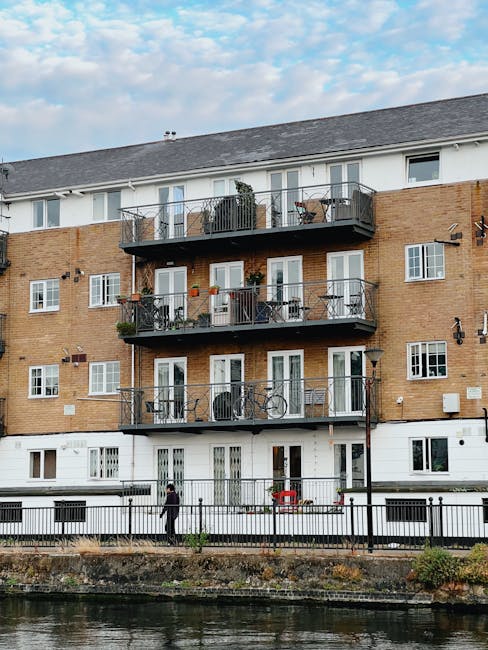
St Margarets man and van for Riverside flats and terraces: a practical local guide
If you are moving in or out of a Riverside flat or a traditional terrace in St Margarets, you already know the awkward parts are rarely the boxes. It is the stairwell, the narrow parking, the awkward turn into the frontage, the neighbour's car that appears five minutes before the van does. A well-run St Margarets man and van for Riverside flats and terraces service is built for that sort of move. This guide explains how it works, why it matters, and how to make the day calmer, quicker, and less stressful than the average move that seems to go on forever.
Truth be told, the best moves are usually the boring ones: clear plan, clear access, clear timing, and nobody improvising at the kerbside. Below you will find practical advice on planning, loading, access, compliance, and the everyday details that make a real difference in St Margarets, especially where flats, terraces, riverside access, and parking reality all collide.
Why St Margarets man and van for Riverside flats and terraces Matters
Moving from a riverside flat or a terrace in St Margarets is different from moving from a house with a long drive and plenty of turning space. The streets can be tighter. Lift access may be limited or shared. Stairs may be narrow, especially in older terraces. And in a riverside setting, access can feel simple on paper but fiddly in real life once you add residents, visitors, bins, deliveries, and the general rhythm of London living.
This is why a local man and van setup can be so useful. The service is usually flexible enough to handle one-bedroom flat moves, partial loads, student-style moves, furniture collections, storage runs, and small office or studio removals. For many people, it is the sweet spot between doing it yourself and booking a full removals team that may be more than you need.
There is also a psychological side to it. A move is not just a logistics job; it is a threshold moment. You are trying to keep the day from becoming a long, expensive shuffle of broken boxes and missed parking slots. A service familiar with St Margarets streets and riverside access can reduce that tension in ways that are hard to quantify but easy to feel.
Practical takeaway: for flats and terraces, the real value is not just transport. It is timing, manoeuvring, careful loading, and having someone who understands how quickly a small access problem can snowball into a delayed move.
How St Margarets man and van for Riverside flats and terraces Works
At its simplest, a man and van service provides a vehicle and one or more helpers to move items from one address to another. But in a local moving context, the process usually has more moving parts than that. The better the planning, the smoother the day.
Typical working pattern
- Initial enquiry: you describe what needs moving, where from, where to, and any access concerns such as stairs, lifts, parking, or narrow entrances.
- Load assessment: the mover estimates the van size, the number of helpers, and how much time is likely needed.
- Scheduling: you agree a collection window, often with some flexibility for traffic and loading restrictions.
- Arrival and loading: items are carried from the property to the van, ideally with a clear route and protected floors if needed.
- Transit: the load is secured for travel so boxes, appliances, and furniture do not shift around en route.
- Unloading and placement: items are taken into the new property and placed where possible, which can save you hours later.
For riverside flats, one detail often gets overlooked: access from the van to the front door. A short walk can still be awkward if there are steps, a shared courtyard, restricted stopping space, or a concierge process. In terraces, the challenge is often the opposite. You may be able to stop fairly close, but you still have a staircase, hall turns, or a front room that acts as the only realistic staging area. Small thing, big effect.
What a good provider usually asks
- How many rooms or items are being moved?
- Are there stairs, lifts, or long carries?
- Is parking available directly outside, nearby, or not at all?
- Are there any bulky items like sofas, wardrobes, or washing machines?
- Do you need help dismantling or reassembling furniture?
- Will the move need multiple trips?
If those questions are not asked, that is a warning sign. Not a disaster, but a warning sign.
Key Benefits and Practical Advantages
A good man and van arrangement can feel refreshingly straightforward. And in a busy part of London, straightforward is worth paying attention to.
1. Better fit for smaller and medium-sized moves
Not every move needs a large removal lorry and a five-person crew. If you are moving a one-bed flat, downsizing, shifting a few large pieces of furniture, or moving between nearby streets, a van-led service often gives you exactly the right amount of help. You are not paying for empty space you do not need.
2. More flexible around access issues
Terraces and riverside developments can have different access quirks. One might be tight on parking. Another might have a lift that is slow or shared. A good local mover can adapt, and that matters more than people realise. A rigid service can be cheap on paper and expensive in stress.
3. Faster than DIY in the real world
Yes, you could hire a van and recruit a couple of friends. We have all seen that plan begin with optimism and end with someone regretting the sofa. A professional helper knows how to stack, protect, carry, and secure items efficiently. That means fewer trips, fewer mistakes, and less strain on your back.
4. Lower risk of damage
Damage often happens during the messy middle of a move: on stairs, through tight hallways, around corners, or while lifting something heavier than it looks. An experienced mover is used to that. They know how to angle furniture, pad sharp edges, and manage the awkward pieces that can catch on doorframes.
5. Less time wasted on logistics
Honestly, moving day often becomes a series of tiny decisions. Where can the van stop? Which box goes first? Can the bed frame come out before the mattress? A local service takes some of that burden off your plate so you can focus on what only you can handle.
A quick comparison
| Option | Best for | Pros | Trade-offs |
|---|---|---|---|
| DIY van hire | Very small, simple moves | Can be cheaper at first glance | You handle driving, loading, timing, and all the heavy lifting |
| Man and van | Flats, terraces, furniture, medium loads | Flexible, practical, efficient, less stress | Usually less capacity than a full removals crew |
| Full removals team | Large households or complex moves | More manpower and structure | Can be more than you need for a small local move |
Who This Is For and When It Makes Sense
This type of service is a strong fit for people who need practical help without the scale of a major removals operation. If that sounds like your move, you are probably in the right place.
- Flat movers: especially if you are on an upper floor, in a block with limited parking, or dealing with a shared entrance.
- Terrace residents: ideal for those narrow hallways, steep stairs, and compact front rooms that make furniture movement awkward.
- Renters between tenancies: useful when there is a hard handover window and you need everything out, then into the next place, with little room for error.
- Students and young professionals: a good choice for smaller loads, shared flats, and budget-aware moving.
- People moving locally within St Margarets or nearby areas: perfect when the distance is short but the handling is still a headache.
- Furniture buyers and sellers: helpful if you have just bought a sofa, wardrobe, bed, or dining set that will not fit in a car.
It also makes sense if you have a mixed move: a couple of boxes from storage, a mattress, a desk, and a few awkward items that you would rather not lift twice. That sort of job is exactly where a man and van can shine.
Where it may not be the best fit is a larger household move with lots of furniture, fragile items, and a need for packing support. In that case, a more fully serviced removals option might be better. No drama. Just choosing the right tool for the job.
Step-by-Step Guidance
If you want the move to go smoothly, treat it like a short project rather than a last-minute errand. A little structure goes a long way.
Step 1: Make a realistic inventory
Write down what is actually moving. Not what you hope is moving. What is moving. Include large furniture, white goods, mirrors, bikes, and anything awkward or fragile. The more accurate this list is, the easier it is to size the van and estimate time.
Step 2: Check access before the day
Walk the route from front door to van space. Count stairs. Look at corners. Check if anything may block the way. On a riverside flat, the route may involve lifts, communal corridors, or controlled entry. On a terrace, it may be a tight staircase and not much else. Either way, the route matters.
Step 3: Confirm parking and stopping arrangements
In London, a move can become frustrating if the van cannot stop sensibly. Think about whether there is loading space, resident-only parking, or a nearby side street. If there are restrictions, plan around them rather than hoping for the best. Hope is not a parking strategy. Annoyingly.
Step 4: Separate essentials from non-essentials
Set aside a small essentials bag with chargers, documents, keys, snacks, kettle items, medication, and a change of clothes. Keep this with you. Do not pack it in the van unless you want to spend the first evening hunting through boxes for a phone charger.
Step 5: Prepare furniture and fragile items
Remove loose shelves, empty drawers where practical, tape doors shut if needed, and wrap glass or delicate surfaces. If a bed needs dismantling, keep the fixings in a labelled bag taped to the frame. It sounds basic, but basic is brilliant when you are tired.
Step 6: Agree the loading order
Usually, heavy and sturdy items go in first, then lighter or more delicate loads are layered carefully around them. A good mover will know how to build a stable load. You still benefit from thinking about what should come out first at the destination, especially if you want beds and kitchen items accessible quickly.
Step 7: Do a final walkthrough
Before leaving the old property, check cupboards, lofts, behind doors, under sinks, and meter areas. People forget things in the most ordinary spots. It happens all the time. The kettle, the TV remote, the one shoe that somehow vanished. You know the feeling.
Expert Tips for Better Results
These are the little things that usually make the biggest difference. Not glamorous. Very useful.
Book around access, not just around time
A 9 a.m. slot sounds neat, but if the building lift is busy or parking is chaotic at school-run time, a later window may actually be calmer. Think in terms of access conditions, not only the clock.
Measure the awkward items
Sofas, mattresses, wardrobes, and dining tables can look manageable until they meet a narrow stair bend. Measure width, height, and diagonal clearance where needed. You do not need to become a surveyor. Just enough to avoid a surprise on the landing.
Use the right packing materials
Good boxes, strong tape, furniture blankets, mattress covers, and a roll of stretch wrap can save you a lot of grief. Especially in a terrace where items may need to be manoeuvred through close corners, or in a flat where communal areas need to stay tidy and protected.
Label boxes by room and priority
Mark boxes clearly: kitchen, bedroom, bathroom, fragile, first-night essentials. You will thank yourself later when you are not opening six boxes to find a toaster at 8 p.m. after a long day of carrying.
Keep communication simple and direct
If something changes, say so early. That could be a new access issue, an extra item, or a delay in keys. Most problems become manageable when they are explained plainly. Usually. Moving is stressful enough without trying to read minds.
Have a plan for wet weather
London weather likes to remind everyone who is in charge. If it is drizzling or downright grey, protect floors, keep towels handy, and think about how boxes will be moved between building and van without getting soaked.
Common Mistakes to Avoid
Some moving problems are almost entirely avoidable. The tricky part is that people often only spot them on the day, when it is far less convenient.
- Underestimating volume: a flat can hold more than you think, especially once you count cupboards, hallway items, and the "small" chair that is never actually small.
- Ignoring parking restrictions: a short walk from van to door can double the workload if you have not planned stopping space.
- Leaving packing until the last minute: rushed packing leads to weak boxes, poor labelling, and more breakages.
- Forgetting building rules: some flats have booking slots for lifts, entry procedures, or delivery restrictions that need advance notice.
- Not disassembling furniture early enough: a bed frame taken apart calmly at 7 p.m. is better than one fought with at 7 a.m. on moving day.
- Failing to protect items: mirrors, tabletops, and screens deserve better than a hopeful shove under a blanket.
A small mistake can become a slow-down, and a slow-down can become a long day. That is the pattern. Not always, but often enough to plan around it.
Tools, Resources and Recommendations
You do not need a mountain of kit to move well, but a few sensible tools make everything easier.
Useful moving kit
- Sturdy boxes: better than mixed free boxes with weak bottoms.
- Packing tape and dispenser: saves time and improves box strength.
- Blankets or furniture covers: useful for wood, painted surfaces, and soft furnishings.
- Mattress covers: especially handy in damp or wet conditions.
- Label stickers or marker pens: simple, but worth their weight in saved time.
- Tools for dismantling: screwdriver, Allen key set, and a small bag for screws and fittings.
- Gloves and grippy footwear: very practical on stairs and at street level.
Helpful planning habits
Make a room-by-room packing order. Start with items you use least often. Keep one box of essentials for the first night. Photograph tricky cable setups before unplugging anything, because reassembling entertainment gear without a photo can become a weird little puzzle nobody asked for.
Local common sense
In St Margarets and nearby riverside pockets, the best recommendation is usually simple: plan for access to be the limiting factor. Not the distance. Not the vehicle. Access. Once you respect that, the rest tends to fall into place more easily.
If you are comparing moving help with broader home services, you may also find it useful to read about practical man and van support in St John's Wood and man and van help in Pimlico for a sense of how small, access-sensitive moves are usually handled in central London. Used sensibly, that kind of comparison can sharpen expectations without overcomplicating the decision.
Law, Compliance, Standards, or Best Practice
For a local man and van move, the key compliance concerns are usually practical rather than dramatic. The most important thing is that the moving arrangement is lawful, safe, and respectful of building and street rules.
Parking and access rules: if loading or unloading is taking place on a public road, be mindful of local parking restrictions, yellow lines, time limits, and resident bays. If a building has its own access rules, follow them. It saves arguments and delays.
Insurance and care: any reputable service should be able to explain how goods are handled and what cover is in place. If you are moving valuable or delicate items, ask questions before the day rather than after something goes wrong.
Manual handling best practice: heavy lifting should be done with care, proper technique, and ideally with enough people for the load. It is not about being dramatic. It is about avoiding avoidable injuries, which are rarely fun and never convenient.
Building etiquette: many flats and terraces share communal areas. Keep routes clear, protect walls and floors where appropriate, and do not block doors or fire exits. A move should not create a problem for your neighbours or the building manager.
Waste and unwanted items: if you are clearing out items at the same time as moving, do not leave rubbish behind without checking disposal arrangements. Broken furniture, packaging, and old appliances need a proper plan. A tidy handover matters.
To be fair, most of this is common sense. But moving day has a way of making common sense go missing, so it helps to spell it out.
Options, Methods, or Comparison Table
There are usually a few ways to handle a small local move. The right one depends on the volume, the access, and how much time and energy you want to spend managing it yourself.
| Method | Best for | What it gives you | What to watch out for |
|---|---|---|---|
| Man and van | Flat moves, terrace moves, furniture transport | Flexible help and efficient transport | Needs clear access and accurate item details |
| DIY move | Very small loads and confident movers | Maximum control if everything goes right | Hard work, risk of damage, and more time pressure |
| Full removals service | Larger households and complex relocations | More manpower and a fuller service | Can cost more and may be unnecessary for smaller loads |
| Single-item courier-style delivery | One item or one bulky purchase | Simple and direct | Less useful when you have a mixed household load |
If you are moving from a riverside flat with tight lift timings and a handful of large items, a man and van usually sits in the most practical middle ground. If you are shifting an entire family home, a different setup may be better. Simple as that.
Case Study or Real-World Example
Here is a realistic example based on the sort of move that comes up all the time in St Margarets.
A tenant is leaving a second-floor riverside flat and moving to a terrace a short distance away. The load includes a double bed, mattress, two bedside tables, a desk, a medium sofa, several boxes of books, kitchen boxes, and a small bike. On paper, it looks like a quick local move. In practice, there are three access points to manage: the flat lift, the shared entrance, and the terrace hallway with a tight turn at the bottom of the stairs.
The job goes smoothly because the planning is plain and realistic. The tenant measures the sofa, books a van with enough loading space, clears the parking detail in advance, and labels everything by room. The bed frame is dismantled the night before, fixings are taped to the frame, and the fragile kitchen items are packed separately. One helper carries, one loads, one keeps an eye on the route. Nothing dramatic happens. Which, on moving day, is almost a success story in itself.
The useful lesson is not that the move was easy. It is that the pain points were spotted early. That is the difference between a controlled move and a day that feels like a scramble from start to finish.
Practical Checklist
Use this before moving day. It is short, because long checklists tend to get ignored when people are tired.
- Confirm the exact moving date and time window.
- Count boxes and major furniture items.
- Check stairs, lifts, and route from property to van.
- Confirm parking or stopping arrangements.
- Label all boxes by room and priority.
- Pack an essentials bag for the first night.
- Disassemble furniture that will not fit through doorways.
- Protect fragile items with proper wrapping.
- Keep keys, documents, and chargers with you.
- Do a final sweep of cupboards, shelves, and storage spaces.
Expert summary: the smoother the access, the simpler the move. The smoother the packing, the faster the loading. And the more clearly you communicate the layout of your riverside flat or terrace, the less chance there is of surprises on the day. Not perfect, perhaps. But much better.
Conclusion
A St Margarets man and van for Riverside flats and terraces is at its best when it solves the real-world stuff: tight access, awkward furniture, parking uncertainty, and the need for a move that feels calm rather than chaotic. For many people, that balance is exactly what matters. You do not need a grand production. You need the right amount of help, in the right place, at the right time.
If you plan well, measure honestly, and choose a mover who understands flat and terrace access, the day becomes much easier to manage. And that matters more than people think. Moving is already a big transition. It helps when the practical side does not make it harder than it needs to be.
Get a free quote today and see how much you can save.
And if all you take from this is one thing, let it be this: a well-prepared move is rarely glamorous, but it can be quietly satisfying. That is a good feeling to end on.
Frequently Asked Questions
What is a man and van service for Riverside flats and terraces in St Margarets?
It is a flexible moving service that provides a van and help with lifting, loading, transport, and unloading. It is especially useful for flats and terraces where access is tighter than a standard house move.
Is a man and van suitable for a small flat move?
Yes, very often. If you are moving from a studio, one-bed flat, or compact terrace property, it can be a practical and cost-aware option, especially for local journeys.
How far in advance should I book?
As early as you reasonably can, especially if your move falls on a weekend, at month-end, or around a deadline for keys. Even a short local move is easier when the date is secured early.
Will the movers help with stairs and awkward furniture?
Usually yes, though you should be clear about stairs, lifts, and heavy items when you book. If you have a sofa with a tricky turn or a wardrobe that barely fits, mention it upfront.
Do I need to disassemble furniture myself?
Often it helps if you do, but not always. Some movers can assist with basic dismantling if agreed in advance. Either way, keep screws and fittings together in a labelled bag.
What if parking is limited near my flat or terrace?
That is common in London, so it is worth planning the stopping point before moving day. Share the details early so the vehicle size and timing can be chosen with parking in mind.
Is it cheaper than hiring a full removals company?
For smaller and medium-sized moves, it often is, because you are paying for the help you actually need rather than a large crew and vehicle setup designed for bigger jobs.
Can a man and van collect from storage as well as home?
Yes, in many cases. It is a useful option if you are moving a few items from storage into a flat or terrace property, or combining storage clearance with a home move.
What should I pack separately on the day?
Keep essentials with you: keys, documents, medication, phone chargers, snacks, and anything you will need before the boxes are unpacked. One small bag can save a lot of rummaging later.
How can I protect fragile items during the move?
Use strong boxes, plenty of cushioning, and clear labels. Mirror, glass, and screen items should be wrapped securely and loaded so they cannot shift around in transit.
Is this service suitable for moving just one large item?
Yes, absolutely. A bed, sofa, wardrobe, or appliance is a common reason people book this kind of service, especially when the item will not fit in a car.
What is the biggest mistake people make with flat and terrace moves?
The most common mistake is underestimating access. People focus on the distance and forget the stairs, the parking, the lift timing, or the narrow hallway that slows everything down.